Wednesday, May 5, 2010

Phil- My Training Horse at Pierce College

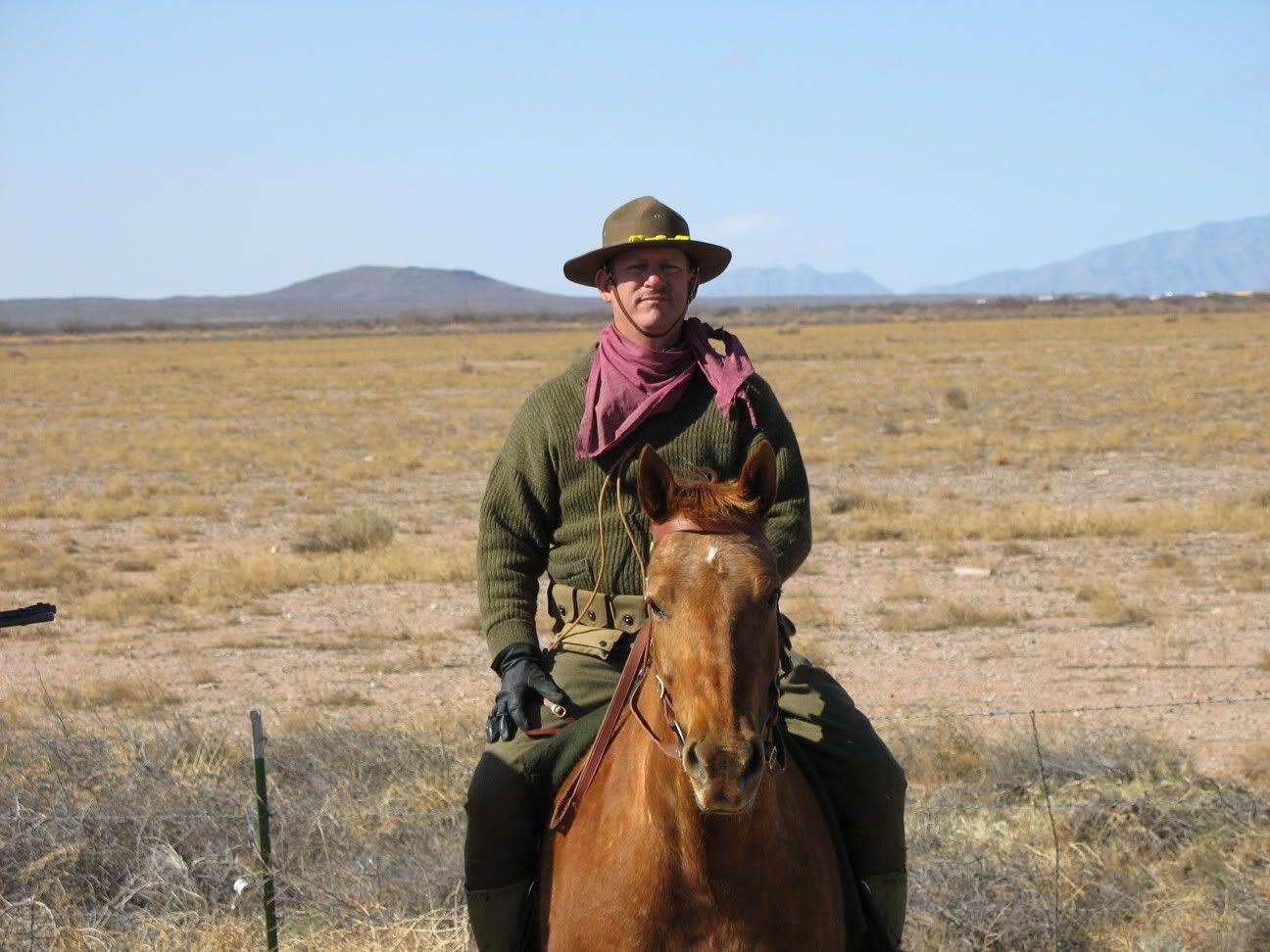
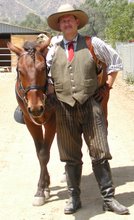
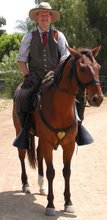
Here are a couple of pictures of Phil, the school horse I'm using for both my Advanced Training and Intermediate Riding classes. Phil, along with the rest of the school herd, will be heading up to a pack station in the Sierras in May to begin their summer jobs as riding horses for pack trips. Phil gained a lot of weight over the Winter and no doubt he'll be losing a lot of it during the Summer.

Phil can be a pretty stubborn horse and his mough is pretty hard due to all the various students and others pulling on his mouth. In the year that I've been riding him, I've managed to get a little bit of his mouth back and he now knows that when I apply leg pressure for a leg yield or sidepass, it doesn't mean speed up...most of the time. :-) Compared to Max, Phil is HUGE and his training is not as extensive but he does have a good personality and he tries- he could easily be Max's bigger brother.


Tuesday, May 4, 2010

Max & I Return to Anza!

Last weekend, Max and I returned to Anza for another Napoleonic battle reenactment. Although I had plans to have a more proper Napoleonic uniform by this years' event, it didn't happen (life got in the way) so once again I donned my generic Spanish Guerilla outfit, which in reality is a modified Southwestern outfit that could pass for anywhere between 1840-1900 (depending on the guns and other equipments).

I trailered Max out early Friday morning so I would have time to set up my camp and be able to saddle up and work Max some. The trip out wasn't too bad except for the usual traffic around the 71/91 Freeways around Corona and we made it down in about three hours. Unlike last year, the weather was clear and sunny with a cool breeze. Apparently, it had snowed the previous week and the weather was unseasonably cold- at night it got down into the 20s and the water in the horses' water buckets actually froze. During the day, it was heavenly!
Here's a couple of pictures from the event:


Here I am guarding the flank of my compadres. We were a mis-mash of uniforms and because of the imbalance between the British and French forces, I acted as one of the French (Spanish Contra-Guerillas).


Group shot after one of the battles. Here we're moving back towards our camp area so we can water the horses. As you can see from the sand, the footing in the wash and many other areas was a lot softer than last year and we had to exercise some caution in riding- bowed tendons are not good! More to follow!

Saturday, April 24, 2010

Chilean Cavalry

Check out this interesting video of the present-day Chilean cavalry on YouTube:


Except for the modern planes and cars and some smaller details, this could easily pass for Germany c. 1918. The cavalry march itself is German, along with the styling of the uniforms, equipment and horse furniture/tack. Way cool!

I especially love the collected canter- yeah!!!

Monday, April 12, 2010

Max & I Doing Civil War at Prado

Last weekend, I participated in a Civil War reenactment with my horse Max. I’ve been involved in Civil War reenacting for some 20 years but this was the first time as mounted cavalry. I arrived at Prado with Max late Friday afternoon and we had ample time to get Max situated with ample supplies of water and alfalfa. The group I belong to had already set up a picket line (aka high line) and I picked a place to tie him up that wasn’t too close to another horse so as to avoid injuries from fighting or play. It’s essential when taking a horse away from their normal environment to make sure that they have enough water and forage to eat, preferably the forage that they normally eat at home. Some horses also don’t like to drink the water in a strange location so I brought water from home but ultimately didn’t need it.


Early the next morning, I assisted in mucking along the picket line and feeding and watering the horses. When in a group situation, it’s always advisable to feed and water all the horses at the same time so as to avoid fighting or disruptive behavior. Afterwards, I saddled and tacked up Max. While the first battle wasn’t until 1 PM, I wanted to work Max first and see how his attitude was. Because we portray Union cavalry (Company A, 10th Ohio Volunteer Cavalry), the standard issue saddle was the Model 1859 McClellan saddle and that is what we use but in reproduction form.

After saddling and tacking, I found an empty area and proceeded to work Max. I started, as I normally do, at the walk and using a number of exercises aimed at increasing Max’s flexion and stretching his muscles. In a typical reenactment, a horse is often called upon to bend, twist, move on the hind end and fore-end and be ready to trot or canter at a moment’s notice. It is highly recommended that any horse used in battle reenactments be in excellent physical condition and possess a high degree of flexion. After loosening up at the walk, I then proceeded to work at the trot and finally at the canter.

While working at all three gaits, I also combined various movements such as leg-yields, side-passes, spins on the haunches and fore-ends, and transitions between gaits (you can never have enough transitions). My horse was a bit on the lively side, no doubt due to the new venue and being around the other horses and while I managed to get Max calmed down a bit, I also knew that I was going to have to stay alert to Max’s actions. Finally, I worked Max along with the rest of the unit in various formations and for the most part he was good (although keeping him in line required some quick corrections).


Finally, it was time for the first battle and we proceeded to the battlefield site, along with the rest of the unit, in proper military formation. Two of the most commonly used formations are line and columns of twos or fours and these are the basic formations used in battle. Soon, the battle began and we found ourselves opposed by an equal amount of opposition (we were playing the part of Confederates for this battle). The horses in my formation soon picked up on the presence of other horses and you could feel their excitement. As we proceeded to maneuver, I found myself having to constantly tap Max with a spur to focus his attention on what I wanted- it was clear that his attention was not on me.

There are two basic forms of combat that we use: Pistol shooting and saber fighting. For pistols, we use reproduction single-shot cap and ball revolvers that fire black powder charges. Typically, we will ride forward single file and the formation will then circle away while each person fires in the direction of the enemy (we maintain a safety zone of about 50 feet) and we’ll repeat this until our pistols are emptied. Afterwards, we would regroup in formation and await the next command. Often, we’ll then be given the order to draw saber and charge the enemy.

For saber fighting, each person will pair themselves up with an opponent and proceed to clash the saber blades. Making slashing movements against either the opposing horse or man is prohibited so typically a fight will consist of each person pushing their saber blade against their opponent’s saber blade. At the same time, each man will be moving their horse in a circular fashion and attempt to gain an advantage by getting around their opponent’s blade. Once this is done, the disadvantaged opponent is considered to be wounded or killed and they will withdraw from the engagement. Often, opponents will pass each other at either walk or trot, and strike their blades before moving off and finding another opponent. There are no hard and fast rules for “victory” and the end result is often determined by the scenario.

Most of the fighting is usually between opposing cavalry, although occasionally the cavalry will ride up and shoot at infantry. With any shooting, care is taken to ensure that the minimum safety distance is maintained and nobody directly fires at another person. Also, when cavalry fights, combats are to involve only one type of weapon (either pistol-on-pistol or saber-on-saber). The preceding description is just a basic overview and there can be all manner of variations on how the forces fight. However, the one thing that’s constant is that safety always comes first; especially since people can get unhorsed quite easily (it happened twice during the weekend). The battles themselves lasted about 30 minutes each and we did two per day. After each battle, the horses were rested and watered. Also, they were provided with a constant supply of forage.

Although doing mock battles on horseback can be fun (and exhausting), there are some things that the rider has to be prepared for. First, the rider needs to train extensively prior to attending their first event- the event itself is not the time to introduce a horse to reenacting and it’s a recipe for disaster, both for yourself and others around you. Ideally, the rider should have been working with a group for at least three or four months prior on a regular basis and getting their horse used to working in close proximity with other horses. When working as cavalry, horses will frequently bump and crash into each other and you don’t want your horse to react by striking out (the temperament of the individual horses also needs to be considered and some never make suitable cavalry mounts). Also, horses need to be desensitized to gunfire, cannon fire and being in close proximity to large numbers of people moving around them on foot in close proximity with weapons. Each horse to going to react differently and you have to be aware of your horse’s personality.

Some other essential things to remember in preparing for reenactments is that the rider needs to constantly train so as to develop a good seat- battles happen so quickly that the rider doesn’t have time to worry about where their body is positioned and they need to constantly remain in balance. Also, the rider’s seat needs to be independent of what the rest of their body is doing because there’s a lot of things that are going on at one time: handling weapons, looking out for other riders, listening for orders, looking out for ground hazards such as gopher holes, etc. Bottom line is that the rider doesn’t have time to think about your riding too much and it has to come naturally.

Finally, the rider has to be aware of the herd mentality and know how to deal with it: sometimes it can work to the rider’s advantage and at other times at a disadvantage. For moments like charging into battle or rallying, it can be helpful because the horse naturally wants to be with his buddies. At other times such as moving off alone from the unit or having the unit move away, the horse still wants to follow and you have to fight the horse’s instinct. Naturally, training can help reduce a lot of this problem but it’s always going to be there.

Overall, this was an excellent event and I learned a lot about working my horse in stressful situations. Also, my horse and I learned a lot about working together as a team and by the end of the weekend, I felt that Max was actually having fun (especially chasing the other horses) and that he was paying attention to my aids. I’d definitely recommend this for someone looking to do something different with their horse.

Monday, March 22, 2010

ETI Trail Trial Playday

Here are a couple of pictures from an event that my ETI Corral (Corral 10) put on last Sunday. Max learned to chase a giant rubber ball and I taught him to stand on a tree stump with his front feet.


Sunday, March 7, 2010

On the Trail (And No Rain!)

In contrast to yesterday, today was relatively clear, sunny and a bit breezy.

Today, a bunch of us decided to hit the trails (the ones we're still allowed on) and head up to the Sheep Pens (about the only area we'e legally able to ride in, thanks to the Station Fire last year). Lately, Max has been acting a bit full of himself on the trail, especially coming back to the stables (no surprise) so this gave me an opportunity to work on this some.

Today, all the horses (and one Mule) were pretty "goey" so Max was constantly being left towards the rear so I'd have to continually trot him out to catch up. Some of the people I ride with have horses with a pretty long stride and most of the time Max doesn't have an issue with it but today was somewhat different. Also, the Mule is pretty long-strided and this didn't help (plus the Mule has a bad habit of pushing himself forward past other horses if he feels he's going too slow- definitely a rider issue there that needs to be addressed).

The only way I can really manage it and have a somewhat pleasant ride (not a great ride) is to let Max trot forward periodically and use half-halts while walking and try to maintain as light contact on the mouth as possible. Also, sometimes when he gets to a gully or hill, he gets excited and likes to run so I have to check him sharply in these areas.

Everything went pretty well although I think Max was having trouble with the pace- he has problems with an extended walk ("power walk", as I term it) and we weren't trotting so he's kind of stuck. Every so often, he'd get himself bound up where he's almost self-collecting so I'd have to bump him into a trot to get him to extend his body and loosen him muscles. I'd then pull him back.

Of course the moment we started to head for home, Max then picked up his pace and wanted to move as quickly as possible- which I prevented. Just to work him a bit, I blocked every effort he'd make to trot with a half-halt. He didn't like it but he complied.

When we got back to the gate leading towards the stables, I purposely made Max stand and wait until the riders had gone up the ramp and disappeared from view. Max definitely didn't like that but I made him stand. After about 5 minutes, I then made him walk up the ramp.

Pretty mundane stuff here, I'll admit, but the issues I have with Max fit a lot of horses when they go out on the trail. One of the biggest problems on the trail is when the gaits of the horses are mismatched- the most extreme example being a Tennessee Walker with a group of ungaited horses. While you're going to have issues such as in the case of gaited vs nongaited hores, in many cases it's a matter of the horse not being trained and/or the rider either not paying attention or allowing the horse to act up. I've been guilty of this in the past and as a courtesy to my fellow trail riders, I try to keep Max in check and if it's really bad, I'll opt out of the ride.

Anyway, I strive to constantly work with Max to make him a good trail horse and while it doesn't always work out, most of the time it does. Happy trails!

Saturday, March 6, 2010

I Hate The Rain!!

It seems that I just can't gauge it right these days when it comes to rain...

Naturally, it had been clear for the entire week until Friday when the clouds started moving in. Saturday morning rolled around and while it looked a bit dark and cloudy from my house, there were also some clear spots...

So off to the stables!

I dressed for rain but as I tacked up Max, I decided that maybe it won't really rain, just maybe drizzle a little talk about being overly optimistic) so I decided to not bother tying my rain parka on my cantle pack (it's a pain to secure and tends to get in the way). So off I rode to Warhorse practice...

I was the first one there and managed to work Max for about 45 minutes before anyone else showed up and soon Max was warmed up pretty well. There was only six of us so we focused on some basic formations and drills; Max quickly fell into the synch with the rest of herd.

While it was getting pretty dark and overcast, still no rain so I thought we'd dodged the bullet...until about an hour into the practice when it began to drizzle a bit. I pretty much shrugged it off until the drizzle turned into a light rain. At that point we decided to stop practice.

So you would have thought we would have headed home? Naw! We decided to check out the river crossing. We rode through a low-lying set of woods which were pretty much now a swamp due to the recent rains but the footing was still pretty sound. By the time we started to cross the river, the rain was pouring down and I was beginning to get soaked, to say the least. But I sucked it up...

After another 15 minutes of riding we all pretty much conceeded that we'd had enough so it was time to head home. I then split off from the party and headed back to the stables by way of the Equestrian Center. Along the way, I stopped to take a break underneath the 210 freeway where I tried to dry off a little bit. Max proceeded to graze on some conveniently located grass and didn't seem to mind being completely soaked.

Finally I decided that the rain wasn't going to stop so gritting my teeth, I rode on for home.

Upon return to the stables, I managed to scrounge up a couple of beach towels and made a half-assed attempt to dry him off. When I took the saddle off, you would see the steam coming off his back- amazing! Max was very happy to stand underneath the shelter in his stall and eat alfalfa.

After making sure he was allright, I fed Max his bucket and then focused on getting myself dry- I'd left my gortex rain parka in the tack sheed along with a vest so after putting them on, I managed to warm up a bit and not feel quite so soggy.

While I've had my share of dealing with wet weather, the older I get, the less fun it gets and the longer it takes for me to warm up. When I got home, I immediately got some dry clothes, downed two shots of Port and curled up in front of the TV.

And that was my Saturday...