Tuesday, December 16, 2008

Wintertime...

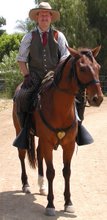
Well, it definately feels like winter and no doubt Max is feeling it. Time to order up some more Glucousime mix for the legs! When I left the house for work today, I could definately feel a chill wind and I'm not looking forward to riding Max tonight, even with layers of sweatshirts et al.

Well, I wanted cold weather and now I've got it! :-)

Monday, December 15, 2008

Winter is Upon Us!

Well, it appears that Winter managed to arrive along with rain! With all the warm weather, Santa Ana winds, and brush fires, you would think that we were in the middle of some new "hot age"...maybe there's something to the whole global warming thing...

There's actually a chill wind and I had to run the heat. The dogs did the smart thing, burrowing into bed with me and using me for warmth (or did I use them for warmth?). I was a mutually agreeable thing for all of us and I really didn't want to get out of bed this morning.

I had to take the dogs out into the rain so they could do their morning constitutional and I don't think they were too happy with it but they were prompt!

Now I think I can better get into the Christmas spirit! :-)

Sunday, December 14, 2008

Putting Those Muscles to Work...

After a late party the night before, I was up bright and early taking up Max for our weekly lesson. After warming up with some trotting and cantering, I worked on roll-backs and coming to a complete halt from a canter. I also engaged in various exercises to loosen up the pelvis, shoulder and neck muscles. Pretty sore business.

Then the lesson started...today we worked on transitions. But this was more than simply going from a halt to a canter or from trot to canter to walk and back again. It was about RIDING the horse, no matter what you're doing. All too often, I'd pretty much ease up on Max after making a transition or a complete halt and this tends to result in Max losing energy. Then, when I start up again, I have to go through the entire process of building up the energy and, more importantly, re-engaging his attention (Hey, buddy, we're going back to work!).

The key, as a I learned, is to maintain leg contact, minimal bit contact, and keep my profile vertical- no learning forward, no matter how subtle. This is especially important in going into a trot or canter from a complete halt- you have to stay off the horse's fore-end so the horse can be free to work his front legs and be able to launch off of his haunches. Otherwise, you're acting like a weight on the front end, blocking the horse from moving effectively (he more "stumbles" into the gait/movement- kind of like me tripping forward into a run).

Also, at the same time, it's essential to use pressure from pelvis along with a half-halt to build up the energy and then letting the horse move forward. It sounds easy but there's a series of actions that have to performed simultaneously and you have to be organized in executing them (i.e. not in a hurry). Also key, is staying off the bit and letting the horse have his head. If everything is done right, the horse will drop his hindquarters and leap up and forward into the motion. This is most dramatic going into a canter from a dead halt.

By the time the lesson was through, we were executing them pretty well and especially on the canters. He was execurting left-lead canters from a dead halt with little urging from me- it used to take a lot of kicking and motion to do this. I'll have to keep practicing this until it becomes second nature and I think it will go a long way towards helping keeping him organized in drill team practice and charges.

The other aspect of the transitions was shifting down from either a canter or trot to either a walk or a complete halt. The transition to the walk was especially tricky because it's easy to apply too much pressure through the pelvis, thus bringing the horse to an abrupt halt. It's a combination of breath/pelvis pressure combined with keeping your leg on and even kicking just a bit (a small bit) to keep him moving foward while slowing him down. It's like applying gas and the clutch and takes a bit of practice.

It appears that I have new things to study and practice on. It never seems to end! :-)

Friday, December 12, 2008

Anniversary - Married 16 Years!

OK, it's Friday, December 12, 2008 and for me, that means I've been married for 16 years. Jeeze, has it been that long?! I've known plenty of people who've gotten married, divorced, and re-married in that span of time. Pretty strange stuff!

The secret? None really, I suppose. I guess I got lucky and married someone who puts up with my various moods I guess. :-)

Truely amazing, my wife and I both have strong personalities and our friends predicted that we'd kill each other withing a year. Proved them wrong! :-)

Thursday, December 11, 2008

Breed of the Day: The Icelandic Pony


Today's horse is the Icelandic. I'm a sucker for these guys and they're amazing to watch. From Wikipedia:

The Icelandic horse is a breed of horse that has lived in Iceland since the mid-800s AD, having been brought to the island by Viking settlers. The Icelandic Horse originated from breeds taken from Scandinavian and European countries to Iceland during the original and subsequent settlements but has now been bred for centuries without the addition of outside bloodstock. Because they are often pony-sized, they are by some referred to as "Icelandic ponies". However, in most places, the breed is considered a "horse" and to call it a "pony" is likely to offend many breeders. mtDNA studies link them to other European pony breeds.[1]
Regardless of size or horse/pony designation, Icelandic horses can easily carry the weight of a large grown adult.


Probably the most beloved trait of the Icelandic horse is its unique character. FEIF's breeding aim for spirit describes a horse that is very willing, brave, happy, forward, cheerful, confident, and offers its best with very little encourangement. A horse that tries to please the rider, is sensible, easy to ride, and easy to handle.


Iceland has never had any predators large enough to be any threat to a horse. Instead it is a country with tremendous environmental dangers, such as harsh extremes in weather, volcanic activity, extremely varied and treacherous terrain, quicksand, rock slides, rivers with changing currents, etc. Therefore, the ability to assess a situation rather than the instinct to flee has been central in the survival of the horse. Even today Icelandics seem to lack the "spookiness" of most other breeds and are more inclined to think through a situation before making the decision to run. They also seem to have a much higher pain tolerance than other breeds and have a strong will to survive even the toughest conditions. There are many old Icelandic tales of horses that overcame tremendous obstacles to carry their riders safely to their destination, and where the sense of the horse was instrumental in gaining safe haven and avoiding death and danger.

Traditionally in Iceland, young horses and those not under saddle were allowed to run free, in large herds in the highlands. Because of environmental concerns, this practice is only continued in parts of Northern Iceland today. Even in other parts of Iceland the horses are often left in vast pastures, largely on their own, for long periods of time. All horses in Iceland are given an annual vacation in late fall of each year, where they can be in herds left alone. The Icelanders feel that it is important that the horse grows up learning how to be an independent thinker, to take care of itself, and to not be too dependent on humans. The Icelanders want their horses to be thinking partners to their riders. They also believe that horses allowed to run free at least part of the year grow stronger, become more sure footed and are more self-confident.

In general, Icelandics are trained to be spirited under saddle. Almost all Icelandics tend to be very calm and easy going on the ground, but most will be surprisingly forward when ridden, when trained that way. Icelanders call this spirit "willingness" or "forwardness". And a willing horse, by Icelandic standards, is a forward horse indeed. A willing horse will always offer more energy to the rider. However as in all other breeds, the amount of willingness varies from individual to individual, some being very willing, others not. Some Icelandics even seem to have the talent to adapt to the skill level of the rider.

In the early days, the rugged Icelandic climate meant that keeping only the best horses was worthwhile. Cramped quarters meant that people, horses and other animals would often share tight spaces. Therefore, any horses that showed faults in character were quickly culled and used for meat. This practice continues today in Iceland and horsemeat is exported regularly to mainland Europe and Japan. This is probably the strongest reason that, today, you will rarely find an Icelandic that would ever kick, bite or even lay its ears back at a human for any reason. Additionally, growing up in a herd may mean that such attributes are tempered when the antics of youngsters are not tolerated by their elders.

Although some Icelandics are more friendly than others, the majority still enjoy the company of people. And most Icelandics are known to form very close bonds with their owners.

Icelandics are considered quite intelligent. As such they often learn new things very quickly. However, as they are bright they usually do not like to be drilled and they must constantly be challenged with new and different tasks to stay interested and willing. Although Icelandics are sometimes schooled in a ring or on an oval track, most like to be trained out on the trail enjoying nature.


Some Truths About Horses

This was relayed to me by a friend:

33 Truths about Horses

1. People who don't take care of their own horses will be the first
ones to tell you how to care for yours.

2. You should never buy a cheap girth!

3. A handsome horse who's badly behaved will become a lot less
attractive in about 15 min.

4. People who think they have nothing more to learn about riding,
hit the ground the hardest.

5. Children and ponies are natural allies and often have identical
dispositions.

6. The richest horse people often look the poorest.

7. The closeness of a horse is one of the sweetest smells in the
world.

8. A solitary ride through the woods is more beneficial than six
months with the best psychiatrist.

9. The worse a person rides the more likely they are going to
blame it on the horse.

10. The best thing about going to the barn first thing in the
morning is that horses don't care how you look.

11. If a dealer insists a horse is worth twice what he's asking he's
usually worth half that much.

12. The best way to appreciate how another person rides is to get on
their horse.

13. I can recognize another horse person no matter what town, city,
state, county or country I visit.

14. You can never have too many hoof picks.

15. It is not always wise to argue with something that outweighs you
by 1,000 pounds.

16. I'd rather have a horse with a perfect mind then a perfect head.

17. Eight hours is not too long to be in the saddle!

18. If you think you have left the water on in the barn you have, if
you think you have closed the pasture gate you haven't.

19. When someone asks you if you like their horse always say yes

20. The happiest people I know own horses, dogs, cats and at least
one deranged goat.

21. If you're looking for the perfect horse you will never own one.

22. Owning a horse can either make a marriage or break it.

23. I'd rather lose my Chap Stick than my curb chain.

24. You shouldn't talk about your first place ribbon to someone that
came in second.

25. If someone says that horse has a little buck, it has a BIG buck.

26. If we need rain, schedule a show.

27. I've never warmed up to someone that didn't want to walk down to
the stables.

28. A clean stable and a sparkling horse are among life's great
pleasures.

29. A FREE horse is not a cheap horse.

30. No matter how badly behaved you are, your horse always gives
you a second chance.

31. A expensive horse doesn't make a better horse.

32. I can't stand to have an empty stable.

33. Losing a horse can break your heart, but it will have been worth it.

Wednesday, December 10, 2008

Some Amazing Horsemanship

Here's another video I came accross on You Tube showing some amazing horsemanship- one wrong move and the horse and/or rider are going to get gored bad. It's amazing to watch a horse doing a sidepass at a canter. That's what Lusitanos and Andalusions were bred to do- fight bulls and come out on top. When people see Lusitanos and Andalusians today, all they see are flighty, hard-to-manage animals, isolated from the context that they were bred to exist in. When you see them in action in a bullfight, it all begins to make sense.